

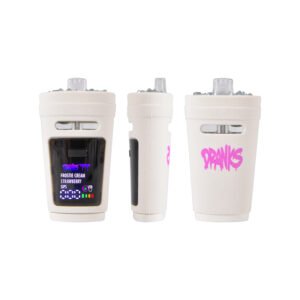
Where to Buy Dranks Disposable in Bulk: A Guide for Vape Wholesalers
Where to Buy Dranks Disposable in Bulk: A Guide for Vape Wholesalers When you’re sourcing disposable vape hardware for your
The disposable vape hardware market has changed considerably in recent years. For brand owners, oil suppliers, distributors, and wholesalers, choosing a device is no longer simply a matter of comparing appearance and unit cost. Capacity, heating performance, material compatibility, battery specifications, leakage resistance, quality control, and regulatory requirements can all affect whether a hardware program performs as expected.
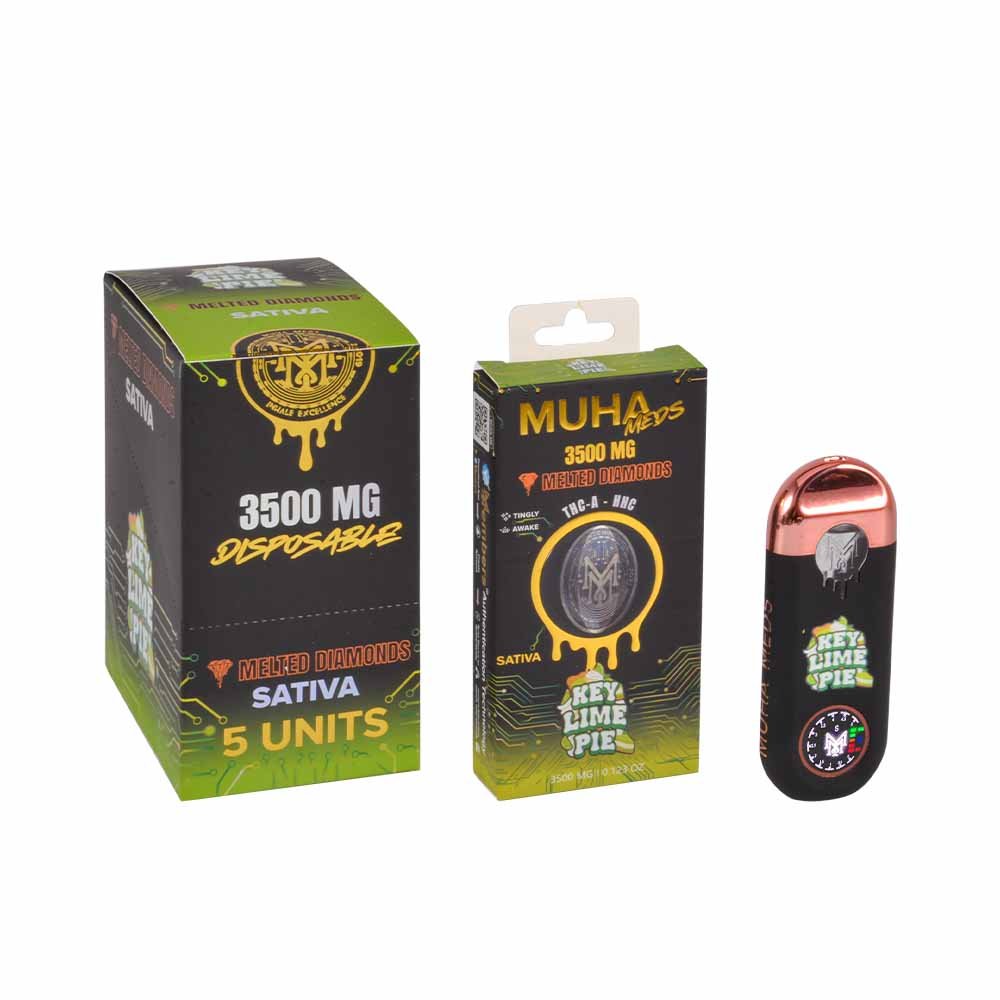
This is especially important when you are evaluating larger-capacity formats such as 3.5g disposable hardware. Although searches for terms such as muha meds 3.5g, muha 3.5g disposable wholesale, muha meds 3500mg, and muha meds 3.5 gram may be used by buyers researching this general device category, businesses should distinguish branded finished products from empty hardware intended for lawful, independently branded applications.
Here are the main factors worth reviewing before you select a supplier or place a commercial hardware order.
A 3.5g disposable device generally refers to an all-in-one vaporizer format designed around a reservoir capacity of approximately 3.5 grams or milliliters, depending on the intended formulation and how the manufacturer specifies capacity.
Unlike a finished consumer product, empty hardware is supplied without oil or other liquid. The buyer is responsible for determining whether the device is appropriate and lawful for its intended application.
Larger-capacity hardware presents different engineering challenges from small disposable devices. A reservoir has to remain stable through storage and transportation, while the battery and heating system must operate consistently over a longer product life.
For that reason, you should evaluate the device as a complete system rather than focusing only on advertised capacity.
Terms such as muha meds 3500mg and muha meds 3.5 gram illustrate how buyers often search for devices by nominal capacity. Capacity is useful, but it tells you relatively little about how the hardware will actually perform.
When comparing empty devices, consider specifications such as:
Two devices with the same nominal capacity can behave very differently because their heating systems, airflow, batteries, and internal materials are different.
It is easy to be drawn to exterior design, especially when packaging and branding matter to your business. From an operational standpoint, however, material compatibility should come first.
Different formulations can have different viscosities and chemical characteristics. A device that performs reliably with one formulation may not behave identically with another.
Before moving into volume production, you should conduct compatibility testing using the exact lawful formulation that will be used commercially. Testing can help identify issues such as inconsistent wicking, clogging, leakage, unusual heating behavior, or component degradation.
A reputable hardware manufacturer should also be able to explain the intended operating range of the device rather than simply describing it as suitable for everything.
The heating element is one of the most important parts of any disposable vaporizer.
For a higher-capacity device, consistency becomes particularly important because the heating system is expected to perform over many more activation cycles than it would in a smaller-capacity product.
Ceramic-based heating technologies are common across the industry, but the term “ceramic” alone does not establish quality. Ceramic composition, surface area, resistance, airflow, manufacturing consistency, and assembly tolerances all influence performance.
Ask suppliers for technical specifications and, where appropriate, independent material documentation. Sampling devices from actual production runs rather than relying solely on demonstration units can also provide a more realistic picture of manufacturing consistency.
A large reservoir needs an electrical system capable of supporting its expected operating life.
Battery capacity is commonly expressed in milliamp-hours, or mAh, but a larger number is not automatically better. Device efficiency, heating-element resistance, power management, charging circuitry, and activation behavior all matter.
Many larger-capacity disposable devices use rechargeable batteries because a single initial charge may not reasonably cover the entire reservoir.
If you are evaluating rechargeable hardware, check the charging connector, protection circuitry, charging behavior, and relevant battery documentation.
You should also consider how the device handles low-voltage conditions. A well-designed product should provide predictable operation rather than producing increasingly inconsistent heating as the battery becomes depleted.
Someone researching muha 3.5g disposable wholesale or similar terminology may naturally focus on the quoted price per device. For commercial sourcing, however, the lowest unit quotation does not necessarily represent the lowest total cost.
Your real procurement cost can include tooling, customization, packaging, testing, defective units, freight, duties, inspection, warehousing, and replacement rates.
Minimum order quantity also matters. One supplier might provide an attractive unit price but require an order substantially larger than your forecast demand.
When comparing quotations, ask suppliers to clearly separate:
This gives you a much better basis for comparing vendors.
Bulk orders should generally follow structured sampling and testing.
A good-looking sample is useful, but you should test more than one device. Manufacturing consistency is often more important than the performance of a single hand-selected unit.
Your internal evaluation might include leak testing, draw consistency, charging tests, storage stability, dimensional inspection, and compatibility testing.
You can also compare samples from different manufacturing batches. If performance varies significantly between batches, that may indicate weaknesses in process control.
For businesses buying hardware at scale, pre-shipment inspection can provide another layer of protection.
A reliable supplier should be able to explain how devices are inspected during production.
Questions you may want to ask include:
Components such as batteries, heating elements, plastics, seals, and electronics should be subject to defined acceptance criteria.
Some manufacturers use automated or semi-automated testing for electrical characteristics, airflow, charging, or leakage.
Ask how failures are documented and whether the factory performs root-cause analysis when defect rates exceed normal thresholds.
Batch identification can be valuable when investigating quality issues after products have shipped.
The purpose of these questions is not simply to collect paperwork. You want evidence that quality control is part of the manufacturing process rather than an inspection performed only when a buyer requests it.
Search terms such as muha meds 3.5g are associated with branded products, but businesses sourcing empty hardware should be careful about trademarks, packaging, product appearance, and other intellectual-property rights.
Purchasing an unfilled device does not automatically give you permission to reproduce another company’s branding or trade dress.
If you intend to build your own product line, original branding and properly authorized designs can reduce intellectual-property risk and help create clearer differentiation in the market.
Vaporizer regulations vary substantially by country and, in some jurisdictions, by state, province, or locality.
Depending on the product and intended use, requirements can affect materials, electronics, batteries, labeling, packaging, transportation, product registration, age restrictions, and permissible substances.
An empty hardware component may also be treated differently from a filled finished product.
Because requirements change, you should verify the rules that apply to your particular product and sales territory with appropriately qualified regulatory or legal professionals before manufacturing, importing, filling, distributing, or selling devices.
Whether you encounter the category while researching muha meds 3.5g, muha meds 3500mg, muha meds 3.5 gram, or general 3.5g disposable hardware, capacity should be only the beginning of your evaluation.
For a commercial buyer, the more useful questions concern compatibility, heating consistency, battery performance, materials, manufacturing controls, documentation, intellectual property, and regulatory compliance.
A slightly cheaper device can become expensive if it creates leakage, returns, filling problems, inconsistent performance, or compliance issues. By testing hardware carefully and evaluating suppliers systematically before increasing order volume, you can make procurement decisions based on measurable product performance rather than specifications or appearance alone.
Get A Free Quote
Related blogs
Where to Buy Dranks Disposable in Bulk: A Guide for Vape Wholesalers
Where to Buy Dranks Disposable in Bulk: A Guide for Vape Wholesalers When you’re sourcing disposable vape hardware for your
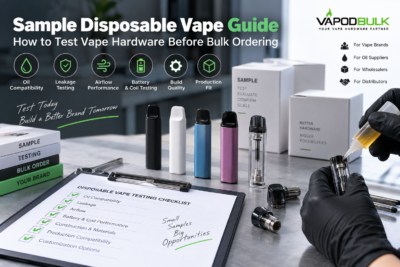
Sample Disposable Vape Guide: How to Test Vape Hardware Before Bulk Ordering
Choosing the right disposable vape hardware can have a major impact on the performance and consistency of your finished product.
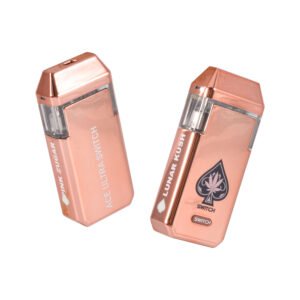
Ace Ultra Switch 2g Device: What Wholesale Buyers Should Know?
Ace Ultra Switch 2g Device: What Wholesale Buyers Should Know? If you source empty vape hardware for a brand, oil