

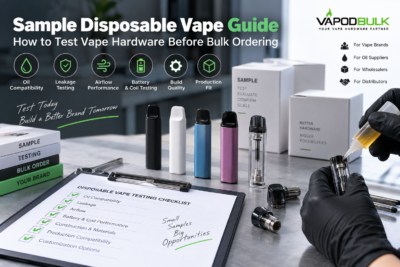
Sample Disposable Vape Guide: How to Test Vape Hardware Before Bulk Ordering
Choosing the right disposable vape hardware can have a major impact on the performance and consistency of your finished product.
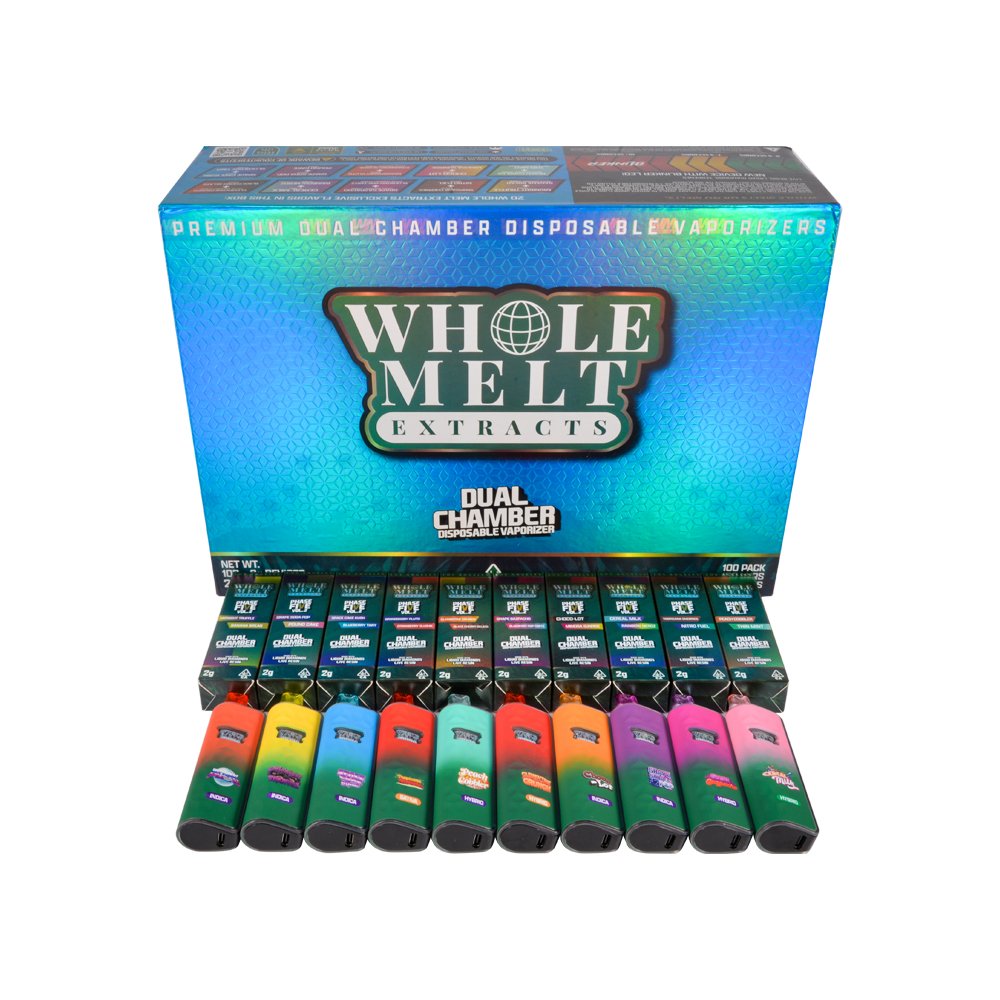
A 2G dual-chamber disposable can look exciting, but an attractive design is not enough. If you are buying hardware for a brand, oil business, or wholesale operation, you need to know whether it fits your oil, filling process, customers, compliance responsibilities, and budget.
That is the practical question behind whole melt phase 5 vol 2 hardware. A dual-chamber device may give you more ways to create a distinctive product, but it can also add testing and production considerations. Before ordering in volume, look at the format as a business tool rather than simply another eye-catching disposable.
A dual-chamber 2G disposable generally divides the total capacity between two reservoirs or oil pathways. Depending on the design, the user may be able to switch between chambers or select a mode that draws from both.
For brand owners, this can support paired formulations or a simple “choose your side” concept. For wholesalers, it can add variety without creating an entirely new product category.
Do not assume that every wholemelt vol 2 dual chamber device operates in the same way. Controls, chamber sizes, heating elements, airflow, charging connections, and activation methods may differ. Ask for specifications and operating instructions before deciding whether the hardware suits your project.
If you run a vape or oil brand, dual-chamber hardware can help your product stand apart and gives you a feature that is easy to explain.
However, the hardware should support your brand story rather than replace it. A more complex device will not fix inconsistent filling, unclear positioning, or weak quality control. You still need dependable performance and a concept your customers can understand quickly.
You should also confirm that you have permission to use any third-party name, logo, or packaging style. Without written authorization, private-label hardware with your own branding is usually the safer long-term option.
For oil suppliers, two chambers can create an opportunity to present complementary formulations in one device. That sounds straightforward, but it makes compatibility testing more important.
The two oils may behave differently during filling, storage, and heating. If one flows easily while the other is thicker, the chambers may not perform evenly. Test each formulation separately, then test the complete device under realistic conditions.
Rather than accepting a general claim that the device works with “thick oil,” ask for filling guidance and samples you can evaluate using your actual formulations.
A wholesaler may find this format useful when retail buyers want visually distinctive alternatives to standard disposable designs.
The challenge is inventory planning. Multiple colours, chamber combinations, and packaging versions can quickly create extra SKUs. Before ordering whole melt phase 5 v2 wholesale quantities, consider which variations your buyers will genuinely reorder.
A smaller mixed trial can be more useful than a large purchase of one design. It helps you identify demand without tying up too much cash in untested stock.
The “2G” label should be the beginning of your evaluation, not the end. Ask the supplier:
You should also confirm in writing that the devices are supplied empty. Your purchase order, invoice, packaging, and shipping documents should accurately state that no oil, e-liquid, nicotine, cannabis extract, or other consumable material is included.
Dual-chamber devices deserve a structured sample test. You are checking whether both chambers perform consistently, not merely whether the device powers on.
Test several units rather than relying on one sample. Fill them using your normal process, then monitor leakage, airflow, heating, charging, activation, and oil movement. Store units in different positions and under conditions similar to warehousing or transport.
Pay attention to whether one side empties faster, whether flavours carry across the airflow path, and whether clogging appears after storage. These observations will tell you more than a product photo or sales description.
Your testing should reflect how the finished product will actually be handled. A device that works immediately after filling may behave differently after several days in storage or a long shipping journey.
A dual-chamber design may require more filling steps than your current hardware. That can affect labour, equipment settings, output per hour, and the likelihood of operator error.
Run a small production trial. Check whether each chamber is easy to identify, the fill ports suit your equipment, and sealing requires additional tools.
Even a small increase in handling time matters across a large order. Include the internal cost of filling, inspecting, labelling, and packing when you compare options.
You should also consider whether your existing filling equipment can handle two different formulations efficiently. If staff must frequently change settings or clean equipment between oils, the additional production time could reduce the financial benefit of the device.
The cheapest quote is not always the least expensive choice. Your real cost may include customisation, packaging, freight, duties, inspections, payment fees, defective units, and production delays.
When comparing whole melt phase 5 v2 wholesale offers, calculate the landed cost per usable device. A higher unit price may still offer better value when the supplier provides consistent batches, clear documentation, responsive support, and a written defect policy.
Ask what happens if only one chamber fails. Is the whole unit considered defective? Will the supplier provide replacements, credit, or a refund? Put the answer in your purchase agreement before paying the final balance.
Minimum order quantity also matters. A low unit price may require you to purchase more stock than you can sell within a reasonable period. Paying slightly more for a manageable trial quantity may give you better control over inventory and cash flow.
Brand recognition can attract attention, but unclear authorization creates risk. Ask for evidence that the supplier may manufacture or distribute hardware carrying the relevant branding.
If authorization cannot be verified, consider choosing an unbranded or privately branded version. Developing your own packaging may require more work initially, but it gives you greater control over your market identity and reduces your dependence on someone else’s branding.
You should also request relevant product, battery, material, and quality-control documentation. The available documents will depend on the device and the destination market, so confirm what your shipping provider, customs agent, distributor, or compliance adviser requires.
Empty hardware may still need specific shipping documentation when a battery is installed. You should also review the rules that apply where you import, fill, brand, distribute, or sell the device. Requirements may involve packaging, testing, age restrictions, batteries, environmental responsibilities, and the substances placed inside the hardware.
Treat supplier documents as part of your due diligence, not as a substitute for qualified legal or compliance advice.
The whole melt phase 5 vol 2 style may suit you when you have a clear two-chamber concept, compatible formulations, reliable filling capabilities, and a supplier offering transparent specifications and repeatable quality.
It may also be worth exploring when your buyers are actively looking for distinctive hardware and you can explain the dual-chamber function clearly. In that situation, the feature serves a genuine purpose rather than acting as decoration.
On the other hand, it may be a poor fit when you need the simplest production process, your formulations require very different hardware conditions, your market is highly price-sensitive, or the branding rights remain uncertain.
There is nothing wrong with choosing simpler hardware. A well-tested single-chamber device may deliver better value when consistency, fast filling, and straightforward inventory management are your main priorities.
So, are Whole Melt Phase Five VOL 2 Dual Chamber 2G devices right for you? The answer depends less on the name and more on how well the hardware works within your operation.
Test the device with your own oils, calculate the full landed and production cost, confirm branding authorization, and review quality-control documents before ordering in bulk. If the dual-chamber feature creates a product your customers genuinely value—and your team can fill and support it consistently—it may deserve a place in your range. If it adds complexity without a clear commercial benefit, a simpler device may be the smarter choice.
Get A Free Quote
Related blogs
Sample Disposable Vape Guide: How to Test Vape Hardware Before Bulk Ordering
Choosing the right disposable vape hardware can have a major impact on the performance and consistency of your finished product.
Ace Ultra Switch 2g Device: What Wholesale Buyers Should Know?
Ace Ultra Switch 2g Device: What Wholesale Buyers Should Know? If you source empty vape hardware for a brand, oil
Why Dual Flavor Donuts Switch Hardware Is Ideal for Two-Flavor Vape Concepts?
Why Dual Flavor Donuts Switch Hardware Is Ideal for Two-Flavor Vape Concepts? The disposable vape hardware market is crowded. If